THE AMAKUNA SAGA
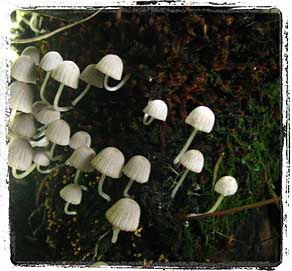
For centuries, the medicine women of the Guanches on the Canary Island La Palma have used a psychotropic mushroom that lets them look into the past and the future. But Amakuna also holds other secrets: It cures all diseases or injuries, and links the fate of those who eat the mushroom to all eternity. In the past and in the present this novel unfolds the dramatic fate of two women whose souls are connected by Amakuna. Both are persecuted by the mighty of their time and need to protect their secret against the man who is the love of their life.
The fungus and the fate of those who have consumed it are banded together over several volumes. Again and again amakuna shows up in different periods and at different locations to challenge us not to be seduced by the greed for power and wealth, but to uphold love. Only those who love are able to recognize how amakuna can be preserved.
One day, when more and more people understand the true meaning of their existence, this magic mushroom will guarantee the survival of our planet.
In the hands of the powerful, this magic mushroom that grows deep inside the volcanic crater on a small island would destroy our planet once and for all. In the hands of lovers, on the other hand, it guarantees the infinity of being.
Daughter of the Dragon Tree is the first volume of the Amakuna Saga.
THE MAIN CHARACTERS ...
... of the first volume Daughter of the Dragon Tree
Iriomé is Tichiname's successor and new guardian of Amakuna. Since her birth around 1470 she lived on Benahoare, today's Canary Island of La Palma. She grew up in harmony with nature. The wind, the stars, and the sound of the ocean are her guides. From Tichiname, the High Priestess, she learned to heal and how to talk to the spirits to foresee her tribe´s destiny. Like all Guanches, she is connected to Tara, the Earth Goddess, who gives life, sustains and takes it again.
Romy is a contemporary biochemist and a strictly scientific believer. When she comes into contact with Iriomé through the fungus, she becomes aware that there is something behind the secret of healing she never would have imagined. Her attitude toward the more irrational and inexplicable things of life changes radically.
Joaquín grew up in Extremadura in the 15th century as the son of a nobleman. He was taught from an early age to preserve and increase the possessions of the family for his descendants. And not only by marriage policy, but also by profitable conquests. The struggle for power and possessions determine his existence. When he falls in love, he is torn between his old life and a new, uncertain future.
Nic is the son of a very wealthy family and also the son-in-law of Gerald Forster, principal shareholder of Forsters Health, one of the largest pharmaceutical companies in the world, where he serves as the CEO. He, too, unexpectedly falls in love and has to decide which path he will choose for his future life.
Alonso de Lugo, the great Canary conqueror, actually existed. In the 15th century he subjugated most of the Canary Islands. His goal was to win as much land as possible for the Spanish crown and be hailed by Queen Isabella as a great hero. In the saga, if Amakuna were in his hands, his soldiers would be invulnerable and he would be able to extend his conquests to the farthest reaches.
Antonio Borges is the Chief of Security for Forsters Health. Although he is Nic's best friend, he does not feel appreciated enough. That makes him a cynic and a misanthrope. And like de Lugo, he longs for power and recognition, for which every means is right.
WHAT YOU CAN EXPECT
IN VOLUME 2 ...
The battle between love and power
will be continued by the children of the heroes
from Daughter of the Dragon Tree.
Shortly before the big court case in which Nic is to testify against Forster's Health, he and Romy disappear under mysterious circumstances, leaving their little daughter behind. Sina grows up with her wealthy grandparents in Panama City. She is well educated to take over the huge financial empire of her grandparents one day. Early on, she understands that she can trust no one, except Nari, a Kuna. His tribe still leads a traditional life on offshore islands at the Caribbean coast of Panama. For years, the Kuna have bravely resisted real estate and financial sharks who want to commercialize their paradise, headed by the Saratoga Bank, owned by Sina´s grandfather. As Sina falls in love with Nari, she turns against the bank´s board and is almost killed. She only survives by the secret medicine of the Kuna: Amakuna. The fungus lets her travel to a former life and takes her back to her roots in La Palma.
Tamanca, the son of Iriomé and Joaquín, leaves his father early to study medicine at the Salamanca University. Later he follows the call of his father into the New World. They join Pizarro's conquest of Darién, todays Panama. Tamanca, in whose veins Guanche blood flows, however, turns away from his father and the gold-obsessed conquistadors. In the Kuna girl Itapiu he finds his great love and introduces her to the mystery of the fungus. For the first time it is now guarded by a loving couple. He leads her tribe to a remote area, where the Spaniards cannot follow. Up to now the Kuna are the only indigenous people in Latin America who preserved an independent government and their culture. Amakuna bridges the historical struggle with the contemporary fight for the Kuna culture´s survival.
THE DRAGON LEGEND
In ancient times, when the earth was still young, rising and falling, and still searching for its final form, there were strange animals. The tribal forebears had created them on a whim and called them dragons. They were one third fish, one third land animal, and one third bird. They could live in the water, crawl over land, and fly. There were not many and only one lived on each island. They were neither male nor female, did not multiply, and were therefore immortal. The sun alone was their food, and if there was not enough, they flew into the volcano craters and fished glowing lava. Then, to cool off, they swam far out into the sea and dived down to the lowest points.
Over time, however, the volcanoes were extinguished, and the lava became fertile soil. The forebears created the first humans, animals, and plants that spread all over the islands. The dragons, whose hot breath dehydrated the plants and scared people to death, retreated to the last remaining volcanic craters where no one else ventured. But they felt limited and no longer comfortable on the busy islands. So some rose to the sky to fly further than ever before. Others disappeared in the depths of the sea and only sometimes appeared, as sailors reported.
Only one could not separate from the islands. The most beautiful of all, red as a shrub of blooming bougainvilleas, dark blue like a cloudless sky, with bright green scales on its shell. He was, however, unhappy and lonely. Wistfully he flew over Benahoare, El Hierro and the other islands and understood that there was no room for him anymore. Sobbing, he shook himself in the air and lost his hide scale by scale. When he was completely naked and defenseless, he flew to the Teide and plunged headfirst into the glowing crater to merge with eternity.
The beautiful, green scales, however, lowered themselves into the ground and took root. And everywhere that happened, a small tree sprouted a year later. These are the dragon trees; they grow on all Canary Islands, but mainly on La Palma, La Gomera, and El Hiero, where the dragon lost most of the scales.
It took a hundred years for the dragon trees to be really big, with huge trunks and crowns, like the scale armor of dragons. Where the scales of the dragon had fallen thicker and the trees stood together in a grove, people met in devotion and the Menceys, the aboriginal leaders, held their meetings there and sat in judgment.
Wise people who sit under a dragon tree today to meditate still feel the power of this place, and some are even convinced that the trees speak to them.
Why it is like that? When the scales from the dragon armor slid to earth, the wind touched them and gave them messages. So if you listen carefully and listen to the language of yesteryear, you can still hear what the dragon trees from the time of the fire-breathing volcanoes tell.
THE SPIRAL
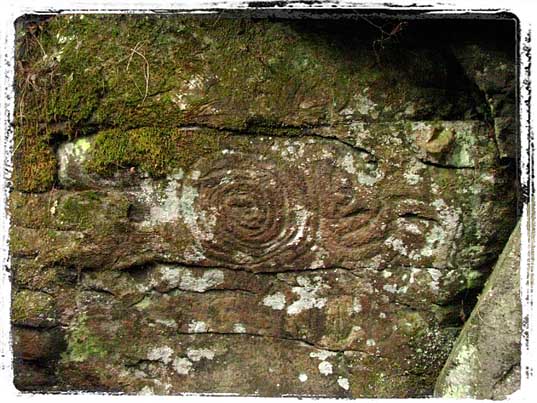
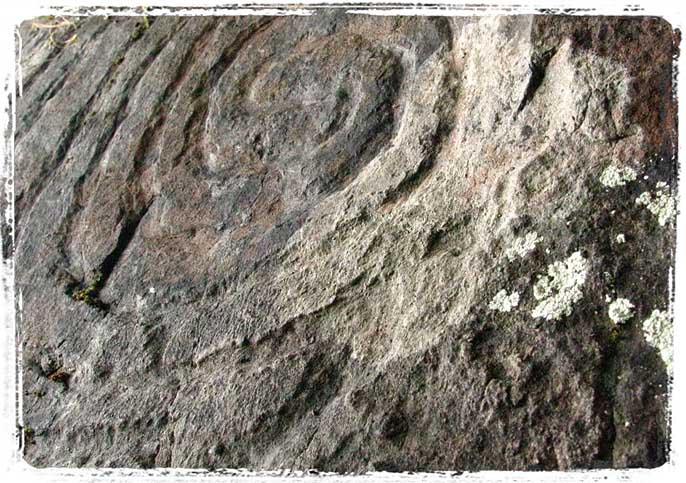
The spiral is an ancient sacred symbol of all cultures. It can also be found everywhere in nature: in shells, snails or the fruit of plants. The DNA molecules are spirals; water flows in spirals; air moves in spirals; high and low pressure areas are spiral. On a large scale, the paths of all celestial bodies, from the smallest rocks, to planets, solar systems, galaxies, and nebulae, probably the entire universe, are spiraling.
The spiral can be found in all ancient religions: in Celtic ornaments, but also in Christian churches. Many finds from the past have the spiral shape, such as belt or coat buckles from the Bronze Age, rings and bangles, but also cultic buildings, stones, and signs. On the Canary Islands you can find ancient petroglyphs in spiral form in many places. Especially at wells. So the spiral is a sign of eternal return and immortality. But it is also a sign of the way of going in and out, a symbol of death and resurrection, of transience and recurrence, reflecting the eternal cycle of nature. Perhaps it also shows humankind's way into the darkness and back to light through karma and purification. This way of erring or loosing and recovering is a theme of many fairy tales and novels. For me, therefore, the spiral is also a sign of humankind's inner transformation and the eternal search for the higher self.
Where the loving heart waits in silence until all it has sent out returns to it.
LOVE is the beginning
LOVE is the motion
LOVE is the eternal incitement
LOVE is the GOAL.
THE GUANCHES
Today all extinct natives of the Canary Islands are called Guanches. Guan means "man"; chinet means "Tenerife". Originally, only the inhabitants of this island were called Guanches.
In 1495, the Spaniards had forcibly conquered all the Canaries at about the same time as the first conquistadors were on their way to South America. Some of the old Canarians fell in unequal combats, others were enslaved. The survivors were Christianized, which led to the cultural destruction of a people who lived in caves, but at the same time were highly cultivated. Their origin is still a mystery to science. Speculation ranges from Nordic inhabitants over expelled Berber tribes to the sunken continent of Atlantis, which was said to have once lain between the Canary and Cape Verde islands. What is left of the Gunaches´s existence are some place names and mysterious signs that they carved into rocks.
SPAIN, THE MOORS
AND THE RECONQUISTA
In the early 8th century, the Islamic Moors destroyed the Visigothic kingdom and conquered the entire Iberian peninsula. Their centuries of rule shaped the country. The Arab heritage was reflected in both architecture and language. The healing arts also had their origin there.
However, the Moors did not manage to settle permanently in the northern edge of the peninsula. From there, the "Christian reconquest" (Reconquista) began. In this process, which lasted for several centuries (722-1492), the Muslim dominion was gradually pushed back by the Christians, until the fall of Granada. In 1492 the last Moorish state entity disappeared on the peninsula. The Moorish Alcazars had become Spanish fortresses. Many have survived to this day. The end of the Reconquista was followed by a persecution of religious minorities. The "Catholic Kings", Isabella I of Castile and Ferdinand II of Aragón, no longer wanted to tolerate non-Catholics in their sphere of influence. Muslims and Jews were forced to be baptized. In 1478, the Spanish Inquisition was set up to track only outwardly converted "infidels" who secretly practiced their previous faith. Often they were sentenced to death by fire and burned at the stake in public, so-called Autodafés.
This is precisely the era in which Iriomé, the heroine of the past, comes to live. The meeting with the Moorish médico reveals the world of the Moors, and with the Jewish treasurer of Trujillo that of the Jews. Both are persecuted by the Christian rulers.
In the Extremadura, one of the poorest and most austere landscapes of Spain, an almost fundamentalist Christianity was established, the area where the great Spanish conquistadors such as Pizarro, Cortes, and de Soto came from, who almost subjugated the entire South American continent with sword and Bible.
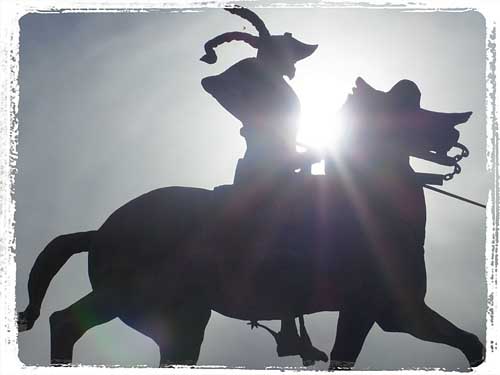
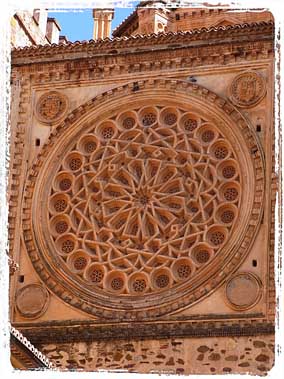
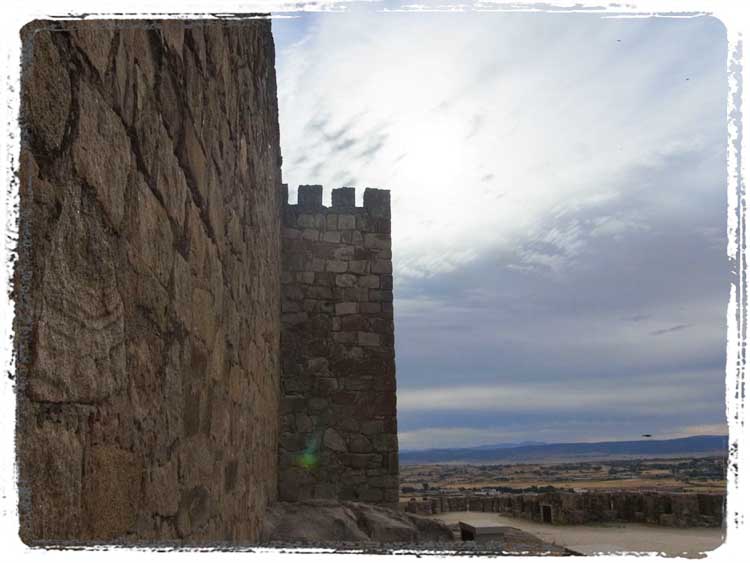
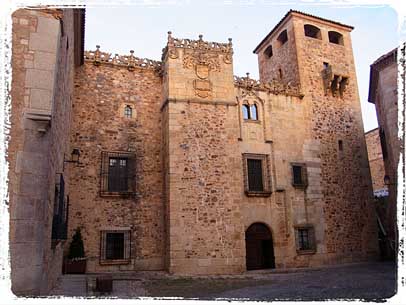
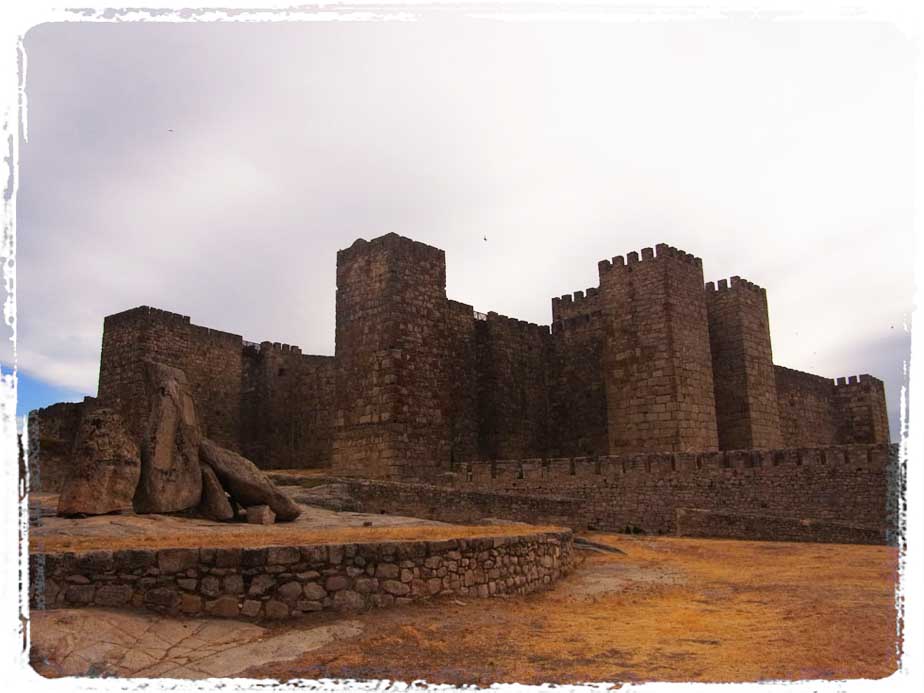
Pictures: the fortress of TRUJILLO and the statue of the
South American conqueror PIZARRO who was born there